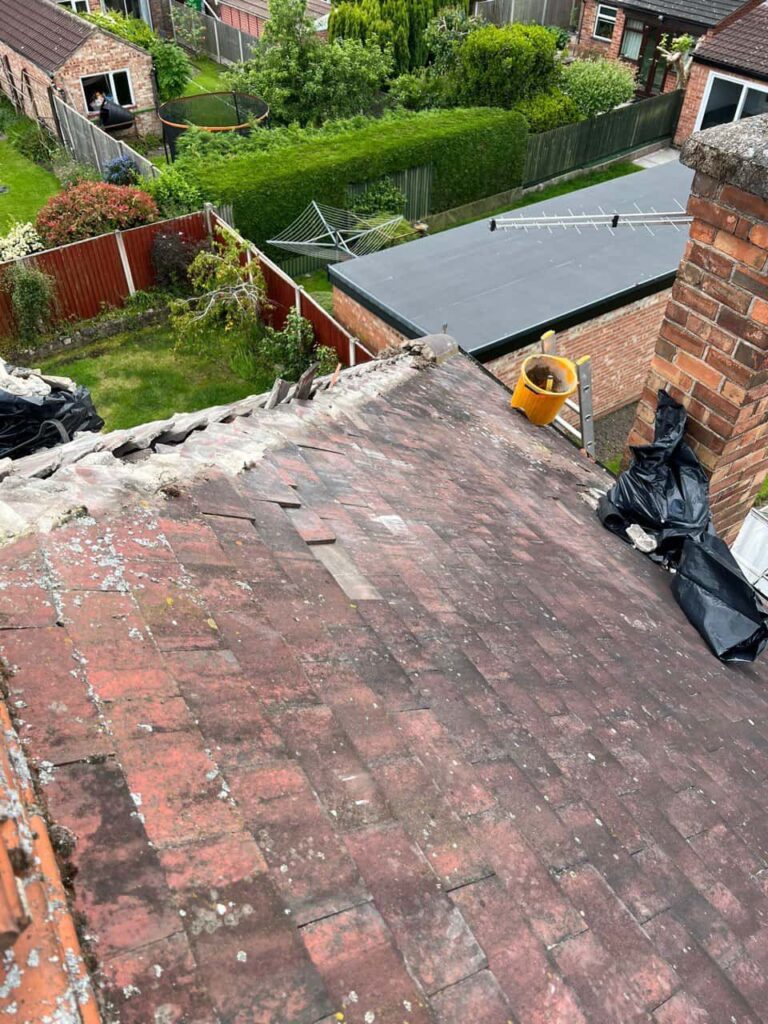
Noticing a problem with your roof can leave you unsure about the next step. A damp patch may appear on a ceiling, a tile might slip out of position, or part of the roof may simply begin to look weathered. The difficulty is knowing whether you are dealing with a small localised defect, a developing problem that needs prompt repair, or signs of wider roof deterioration.
The most important step is to establish what is actually causing the problem before deciding how it should be addressed. Roofing systems contain numerous components that work together, and the most visible symptom does not always reveal the underlying cause.
For homeowners in Bradford on Avon, Wiltshire, LJ Roofing Bradford on Avon provides professional roofing assessments and repairs focused on identifying the problem accurately and recommending work appropriate to the condition of the roof.
Start by Looking for Changes
Homeowners do not need specialist roofing knowledge to recognise that something has changed.
You may notice:
- A slipped or missing tile
- Water staining on a ceiling
- Damp within the loft
- Roofing debris around the property
- A visible gap in the roof covering
- Deterioration around flashing
- An uneven section of roof
- Problems that return after previous repairs
These signs indicate that the roof deserves attention, but they do not necessarily tell you what repair is required.
Do Not Assume a Roof Leak Means Major Failure
Water entering the property is one of the most common reasons homeowners become concerned about their roof.
However, even on an older roof, a leak does not automatically mean that the complete roofing system has failed.
A Leak Could Be Caused By:
- A cracked tile
- A slipped slate
- Damaged flashing
- A vulnerable roof junction
- Localised underlay deterioration
- A problem around a roof penetration
If the surrounding roof remains sound, correcting the specific defect may provide an effective solution.
The first priority should therefore be locating the true source of the water.
Understand That Water Can Travel
One reason professional diagnosis is important is that the position of an internal damp patch may not correspond with the external roofing defect.
Once water gets beneath the roof covering, it can travel along underlay, battens, timbers and other surfaces before becoming visible indoors.
This can make apparently straightforward leaks difficult to diagnose accurately from inside the property alone.
Treating the wrong area will not solve the underlying problem.
Is the Problem Localised or Widespread?
This is one of the most useful distinctions when deciding what to do next.
Localised Problems
A defect may be suitable for targeted repair when:
- Only one or two tiles are damaged
- One particular area is leaking
- Flashing has deteriorated in a specific location
- The surrounding roof remains serviceable
- The roofline remains stable
Widespread Problems
More comprehensive attention may be required when:
- Numerous tiles are deteriorating
- Leaks occur in several places
- Problems repeatedly return
- Large areas of underlay are affected
- Several roofing components are failing
- The roofline shows visible movement
A professional roof assessment can determine which situation applies.
Check Whether Tiles or Slates Have Moved
A slipped tile may appear to be a minor defect, but leaving it unattended can expose the materials underneath to weather.
If you can safely view the roof from ground level, look for changes in the pattern of the roof covering.
Signs Can Include:
- Tiles sitting lower than neighbouring ones
- Unusual gaps
- Missing tiles
- Broken sections
- Uneven rows
- Roofing fragments on the ground
Avoid climbing onto the roof yourself. The reason a tile has moved may involve damaged fixings or battens that cannot be properly assessed from the surface alone.
Consider Whether the Problem Followed Adverse Weather
If roofing problems become noticeable after strong winds or heavy rainfall, arrange an assessment rather than assuming everything will settle back into place.
Weather can expose weaknesses that were already developing.
For example, a weakened fixing may finally fail during strong winds, allowing a tile to move. The weather may therefore reveal the defect rather than being its only cause.
Checking the affected area can help determine whether damage is isolated or whether surrounding components also require attention.
Look at the History of the Roof
One new problem does not necessarily indicate that a roof is generally deteriorating.
A pattern of problems is more informative.
Ask Yourself:
- Has the roof required several recent repairs?
- Do the same problems keep returning?
- Are new leaks appearing in different places?
- Are more tiles becoming damaged?
- Have previous repairs remained effective?
If repairs have been occasional and successful, another localised repair may be perfectly appropriate.
If problems are becoming increasingly frequent, the condition of the entire roof deserves closer consideration.
What Is Happening Beneath the Roof Covering?
Tiles and slates are only the outer layer of the roofing system.
Beneath them are important components that influence how effectively the roof performs.
Underlay
Underlay provides secondary protection beneath the main roof covering. If it has become damaged or deteriorated, water may travel further into the roofing structure.
Battens
Battens support tiles or slates and provide fixing points. Localised deterioration can contribute to movement within the roof covering.
Structural Timbers
Where water ingress has existed for an extended period, the condition of supporting timber may also need to be checked.
Understanding what is happening underneath the visible surface is often essential when determining the correct repair.
When Is a Roof Repair Likely to Be Enough?
Many roofing problems can be successfully addressed through professional repairs.
Targeted repair is generally most appropriate when the cause can be clearly identified and the wider roof remains in satisfactory condition.
Typical Repairable Problems Can Include:
- Individual slipped tiles
- Small numbers of broken tiles
- Localised flashing defects
- Isolated leaks
- Limited weather damage
- Particular deteriorated roof details
The objective should be to correct the cause rather than simply cover the visible symptom.
When Should Wider Roofing Work Be Considered?
Sometimes an inspection reveals that the visible problem forms part of broader deterioration.
For example, one slipped tile may lead to the discovery that numerous surrounding tiles have weakened fixings. An isolated leak might reveal extensive deterioration of older underlay.
Wider Work May Be Appropriate Where There Is:
- Extensive roofing material deterioration
- Recurring water ingress
- Widespread underlay failure
- Significant batten deterioration
- Multiple vulnerable roof sections
- Visible roofline movement
- Numerous previous repairs
The extent of the deterioration should guide the solution.
Does an Older Roof Automatically Need Replacing?
No.
Age is an important consideration, but it should not determine the decision by itself.
An older roof can remain suitable for professional repairs when its structure is sound and deterioration is limited to particular areas.
Likewise, a roof does not need to be extremely old before significant problems can develop.
The relevant question is not simply, “How old is the roof?” but rather, “How well is the complete roofing system performing?”
Do Not Rely on Repeated Patching
Temporary patching can sometimes hide the visible symptom without resolving the actual roofing defect.
If a problem keeps returning, further investigation is required.
For example, repeatedly repositioning a slipped tile will achieve little if the batten or fixing underneath has deteriorated.
Professional roofing work should aim to identify and correct the underlying cause wherever possible.
Why Early Attention Can Make a Difference
Small roofing defects can sometimes remain localised when addressed promptly.
If left exposed, however, water and weather can begin affecting neighbouring components.
A damaged tile can expose underlay. Deteriorated underlay can allow moisture to reach battens. Continued water ingress can then affect materials deeper within the roof.
Early assessment helps establish the extent of the problem before unnecessary secondary deterioration occurs.
What Should a Professional Roofer Assess?
A proper roof inspection should consider the affected area in the context of the wider roofing system.
Important Areas Include:
- Tiles or slates
- Fixings and supporting components
- Flashing
- Roof junctions
- Ridge and verge areas
- Signs of water ingress
- Accessible underlay and battens
- Previous repair areas
- Overall roofline condition
This wider approach helps distinguish a straightforward repair from a more extensive roofing problem.
Repair or Replacement: Avoid Making Assumptions
Homeowners sometimes assume the worst when a leak develops. Others may continue requesting small repairs even when their roof is clearly deteriorating across several areas.
Neither approach is ideal.
The correct decision should follow an assessment of the roof’s actual condition.
Where most of the roofing system remains sound, professional repair can preserve serviceable materials and restore protection. Where deterioration has become extensive, more comprehensive work may provide the appropriate long-term solution.
When Should You Arrange a Professional Assessment?
Consider arranging an inspection if you notice:
- New water staining
- Missing or slipped tiles
- Roofing debris
- Visible cracking
- Problems around flashing
- Repeated roof leaks
- Changes to the roofline
- Damp within the roof space
- Previous repairs deteriorating again
You do not need to know what is causing the problem before contacting a roofer. Identifying the cause is part of the professional assessment.
Professional Roofing Services in Bradford on Avon
When a roof needs attention, the quality of the diagnosis is just as important as the quality of the eventual repair.
At LJ Roofing Bradford on Avon, we assess roofing problems throughout Bradford on Avon, Wiltshire with consideration for both the immediate defect and the wider condition of the roof.
Our approach is centred on establishing what has gone wrong, understanding the extent of deterioration and carrying out appropriate roofing work rather than simply treating the most obvious symptom.
Conclusion
When your roof needs attention, the best next step is to establish the cause and extent of the problem before deciding on the solution.
A slipped tile, isolated leak or localised flashing defect may only require targeted professional repair. However, recurring leaks, widespread tile deterioration, failing underlying materials or changes to the roofline can indicate that broader roofing work should be considered.
The key is not to make assumptions based on one visible symptom. A professional assessment can determine how the complete roofing system is performing and identify the appropriate course of action.
If you have noticed a roofing problem at your property in Bradford on Avon, Wiltshire, LJ Roofing Bradford on Avon can assess the roof, identify what requires attention and recommend a practical solution focused on restoring dependable protection.
Call us on: 01225 234 389
Click here to find out more about LJ Roofing Bradford on Avon
Click here to complete our contact form and see how we can help with your roofing needs.