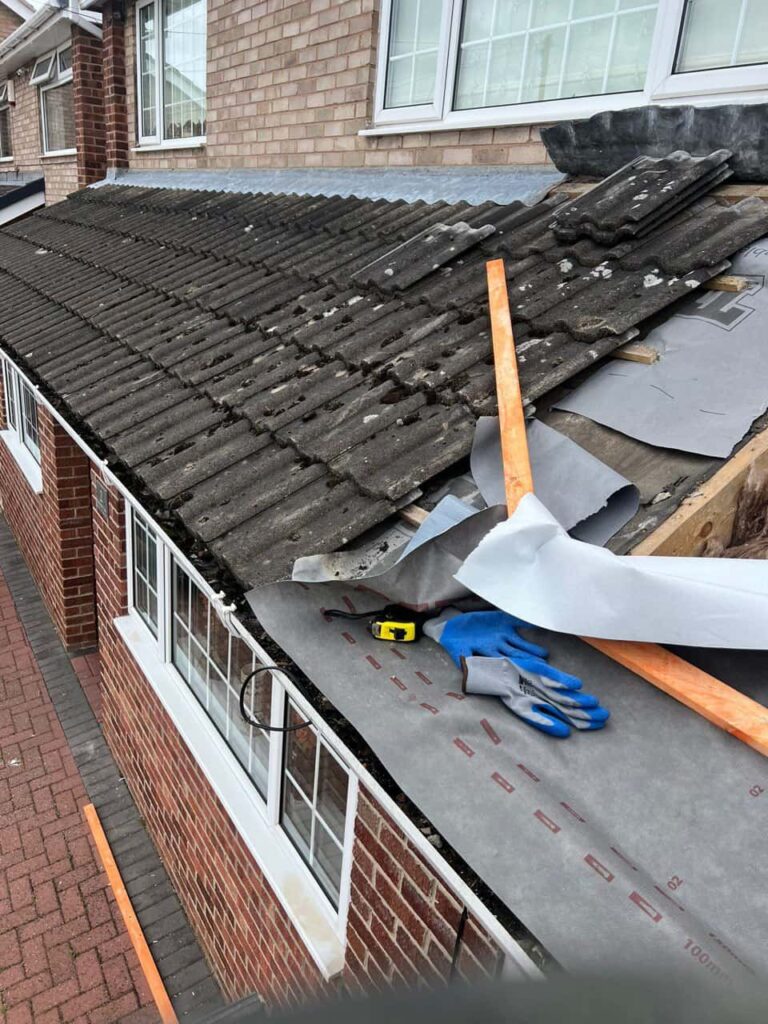
When roof damage appears limited to one area, a localised repair may seem like the obvious solution. In many cases, it is entirely appropriate. However, the visible defect may be only one part of a broader problem affecting the roof covering, underlay, battens or supporting timbers.
Choosing between a targeted repair and replacing a larger section of roofing requires a careful assessment of the whole affected area. The aim is not to undertake more work than necessary, but to select an approach that restores dependable protection and reduces the likelihood of recurring problems.
Factors That Determine How Much Roofing Work Is Needed
Is the Damage Genuinely Localised?
A localised repair is usually suitable when the defect has a clear cause and the surrounding materials remain sound. Examples include a small number of displaced tiles, an isolated flashing defect or damage caused by a specific impact.
An inspection should confirm that the problem has not spread beneath the visible surface. Water can travel along underlay and timbers before appearing inside the property, so the position of a damp patch does not always reveal where the roof has failed.
What Condition Are the Surrounding Tiles or Slates In?
The condition of neighbouring materials is an important consideration. If the surrounding tiles or slates remain secure, intact and suitable for continued use, repairing the affected section may be sufficient.
Replacing more of the roof may deserve consideration when nearby coverings are cracked, porous, loose or becoming increasingly fragile. Disturbing deteriorated materials during a small repair can sometimes expose further weaknesses, making a wider solution more practical.
Has the Same Area Been Repaired Before?
Repeated defects in one section can suggest that earlier work addressed the symptoms rather than the underlying cause. A tile may have been replaced, for example, while weakened battens, failing underlay or water entering through an adjoining detail remained untreated.
A record of recurring leaks, slipped tiles or failed patch repairs is a strong reason to investigate more thoroughly. Repairing the same visible defect again is unlikely to deliver a reliable result if the supporting components continue to deteriorate.
Are the Battens and Underlay Still Serviceable?
Tiles and slates form the outer layer of a roofing system, but they depend on the materials beneath them. Battens provide support and fixing points, while the underlay offers an additional barrier against moisture.
Where these components remain in good condition, local repair work may restore the roof effectively. If the underlay is brittle, torn or sagging, or if the battens have weakened, replacing a larger section can provide access to renew the affected materials properly.
Where Is the Damage Located?
Some parts of a roof are more complex than others. Valleys, ridges, verges, chimneys and roof junctions must manage water effectively while connecting several materials or roof sections.
A defect in one of these locations may affect more than the immediately visible area. The repair must account for water flow, overlaps, fixings and adjoining materials. In some cases, opening a wider section is necessary to form a secure and continuous weatherproof detail.
Is Water Entering Through More Than One Point?
Several unrelated damp areas can indicate that deterioration is no longer confined to one location. The roof may have multiple weak points, or water may be travelling through concealed spaces before becoming visible.
A professional roof inspection can distinguish between one leak producing several internal signs and separate defects affecting different areas. This distinction is essential when deciding how extensive the work should be.
Does the Roofline Show Signs of Movement?
Changes in the roofline, such as dipping, uneven sections or areas that appear distorted, require closer attention. These signs may indicate movement in the battens or supporting structure rather than a simple surface defect.
Replacing tiles alone will not correct underlying movement. The affected area needs to be opened carefully so that the condition of the supporting materials can be properly assessed and addressed.
The Value of a Complete Roof Assessment
A dependable recommendation should be based on evidence rather than the size of the visible defect alone. A professional assessment considers the cause of the problem, the condition of surrounding materials and the performance of the wider roofing system.
At LJ Roofing Bradford on Avon, we assess whether damage can be resolved with a focused repair or whether replacing a larger section would provide a more reliable outcome. This ensures that serviceable roofing materials are retained where appropriate while deteriorated components are not left hidden beneath temporary work.
Conclusion
Repairing one area can be the right choice when damage is genuinely localised and the surrounding roof remains sound. Replacing more of the roof may be preferable when defects are recurring, underlying materials have deteriorated or several connected components are beginning to fail.
If you are uncertain how extensive your roofing work needs to be, contact LJ Roofing Bradford on Avon. We provide professional roof assessments for properties in Bradford on Avon, Wiltshire, followed by clear guidance based on the roof’s actual condition.
Call us on: 01225 234 389
Click here to find out more about LJ Roofing Bradford on Avon
Click here to complete our contact form and see how we can help with your roofing needs.